


Designing Modern Polyclinics: Why Architecture Matters More Than Ever

Over the past few years, healthcare environments have changed dramatically. Patients expect spaces that feel reassuring, efficient, human, and aligned with the values of the brand behind them. As designers, we’ve seen how the architecture of a clinic influences not just its functionality, but the trust it builds with the people who walk through its doors.
Consistent Identity Matters Across Every Location
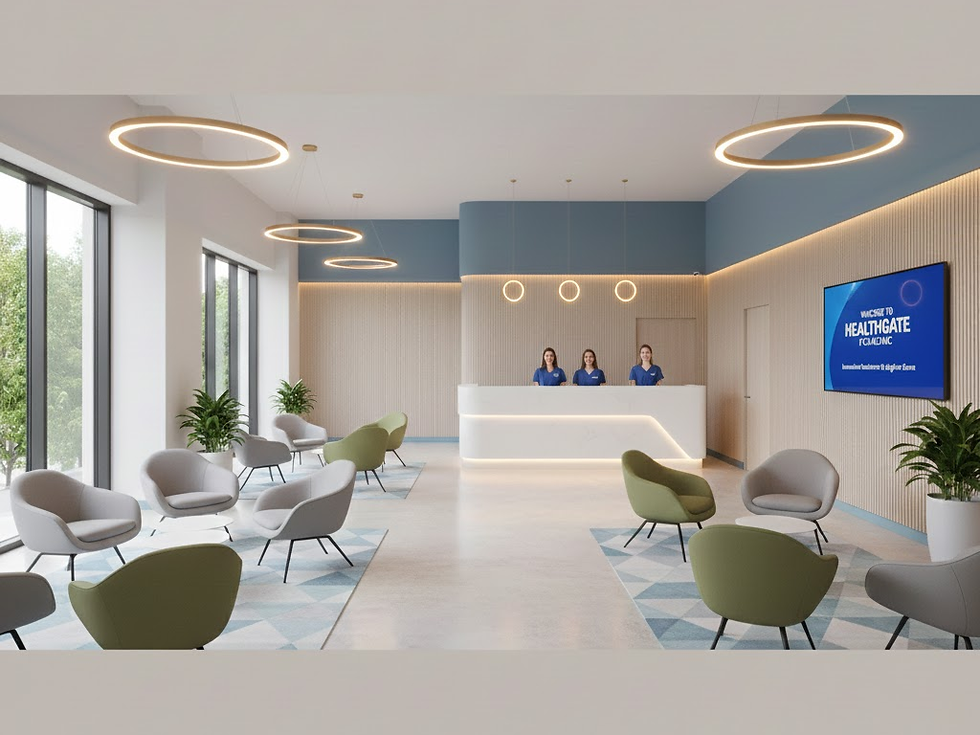
One of the biggest challenges healthcare brands face today is maintaining visual and experiential consistency across multiple branches. A patient should feel the same level of clarity, comfort, and brand familiarity whether they are visiting a clinic in Dubai, Riyadh, or Doha.
From our own experience, when a brand expands rapidly without design standards, each clinic starts to look and behave differently. Materials change, layouts evolve, and brand cues disappear. What should be a health clinic's interior design strategy ends up becoming a series of disconnected decisions.
Designing a system that carries brand identity from one location to another has become just as important as designing the first clinic itself.
Design Shapes Patient Experience Long Before Treatment Begins
We’ve observed this countless times - patients judge a clinic before they meet a doctor.
They notice spatial clarity, lighting, privacy, acoustics, and movement subconsciously.
A well-designed clinic communicates:
You are safe
You are welcome
You will be taken care of
But it doesn’t do this through decoration; it does it through planning.
Good clinic architecture plans prioritise:
Intuitive circulation
Clear zoning
Easy navigation
Comfortable waiting spaces
Efficient staff workflow
Patients may not articulate this, but they respond to it.
We’ve seen clinics with strong layouts reduce waiting time, improve staff collaboration, and build patient confidence in ways branding alone cannot achieve.
The Beauty of Minimal, Calming Interiors
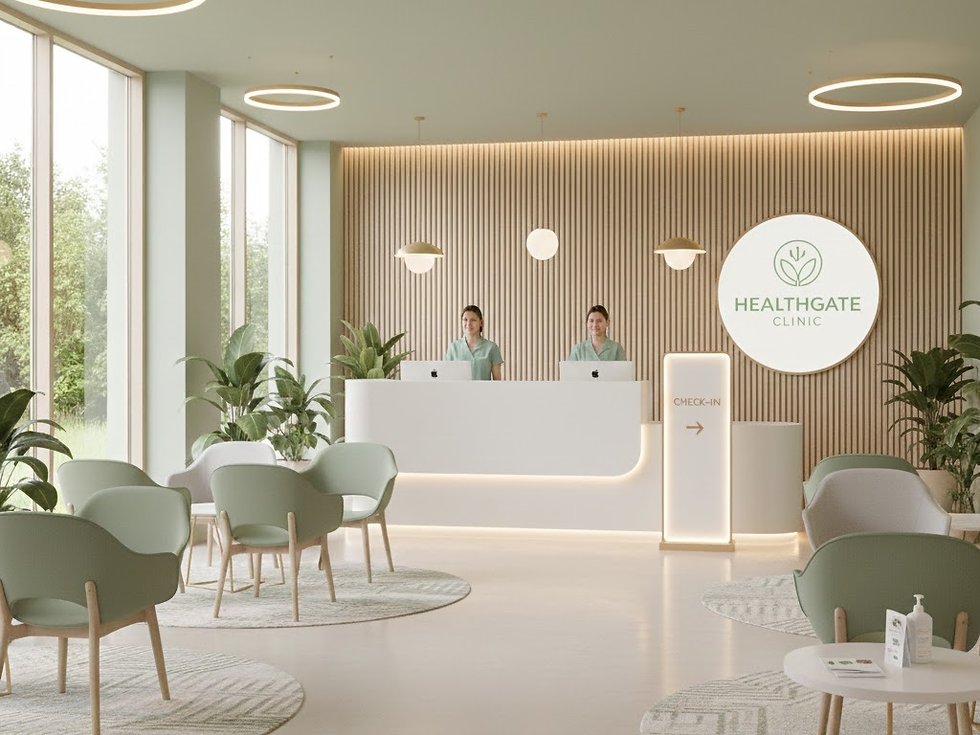
Healthcare doesn’t need to look clinical to feel professional. We’ve seen a global shift, especially in beauty clinic interiors and skin clinic interiors, toward softer, more emotionally grounded environments. Patients today expect spaces that feel warm, private, and reassuring. What creates this feeling isn’t loud design gestures, but subtle choices: materials that are easy to maintain, color palettes that age well, and seamless detailing that removes visual noise. The most effective healthcare interiors are the ones that feel calm without pretending to be clinical or pretending to be luxurious — they simply feel human.
Designing for Brands That Want to Expand
Many healthcare brands are now expanding across cities and countries, each with different building conditions and regulatory frameworks. Architecture becomes important not just as a design exercise, but as a tool to maintain brand clarity. We’ve learned that successful multi-location clinics don’t reinvent themselves each time; they invest in a design language that can travel — a set of materials, lighting cues, and spatial logic that makes every branch feel familiar, without being identical. Good design for scaling isn’t about duplication. It’s about creating systems that adapt gracefully.
Why Healthcare Needs Designers Who Understand People
Healthcare environments leave emotional impressions that last longer than the treatment itself. Patients remember how they felt walking through a space long before they remember what they were told. Staff remember how tiring or supportive the environment was, not just how aesthetically pleasing it looked. This is why, when we design interiors for medical clinics, our attention naturally goes to behaviour — arrival, waiting, transitioning, social interaction, recovery. The role of architecture is not to decorate these moments but to support them. When spaces are planned thoughtfully, anxiety reduces, workflows improve, and care feels easier for everyone involved.
Ultimately, designing modern polyclinics is about designing environments where care feels natural, where noise reduces instead of escalating, and where every interaction is supported rather than strained. When architecture and interior design work in service of people, not aesthetics alone, clinics become places that patients trust, staff thrive in, and brands can confidently grow across cities and borders.


Comments